Khanh B. Trang, MD, MPH, PhD · Children’s Hospital of Philadelphia. I join human genetics and multiomics to find which genes, in which cells, are worth drugging.
01 Population a population
Genome-wide studies find thousands of risk variants. Association alone is not mechanism.
Autoimmune study16 autoimmune GWAS
02 Person 1 m
Behind every signal: a person, and the organs where disease happens.
Across the bodyDrag to turn · hover an organ for its papers
03 Tissue one section per organ
Disease happens in tissue. Spatial omics maps each organ’s cells in place.
MethodSpatial transcriptomics · method
04 Cell types expression space, all organs
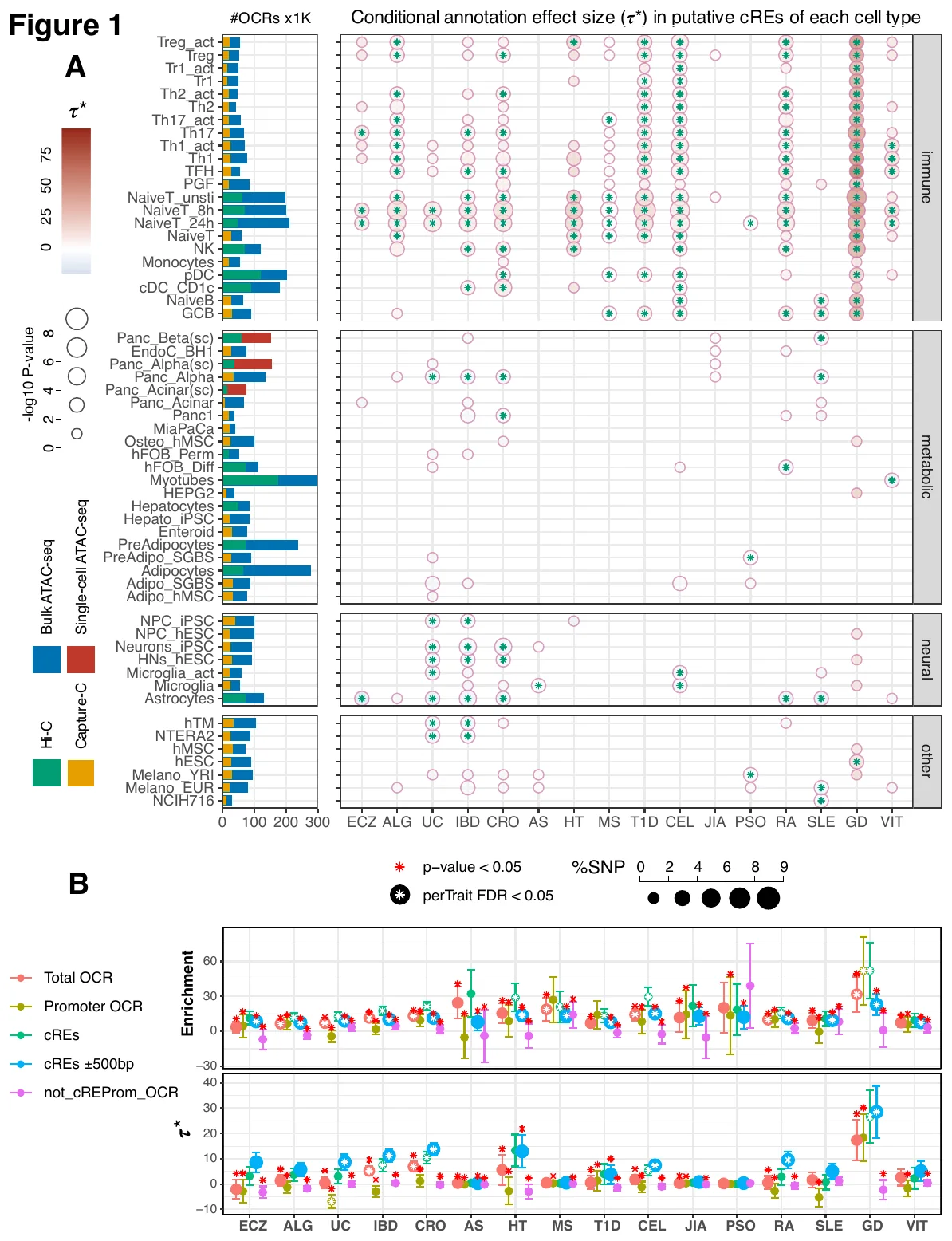
Among 57 cell types, regulatory T cells showed the strongest type 1 diabetes enrichment.
Read the evidence →Scroll to zoom · hover the rings for detailScenes are illustrative
Genetics that ends in a cell type. Atlases that end in a target.
Who
Clinical scientist, geneticist, epidemiologist (MPH) and computational biologist (PhD, Marie Skłodowska-Curie fellow). Senior Staff Bioinformatics Scientist, Division of Human Genetics, Children’s Hospital of Philadelphia.
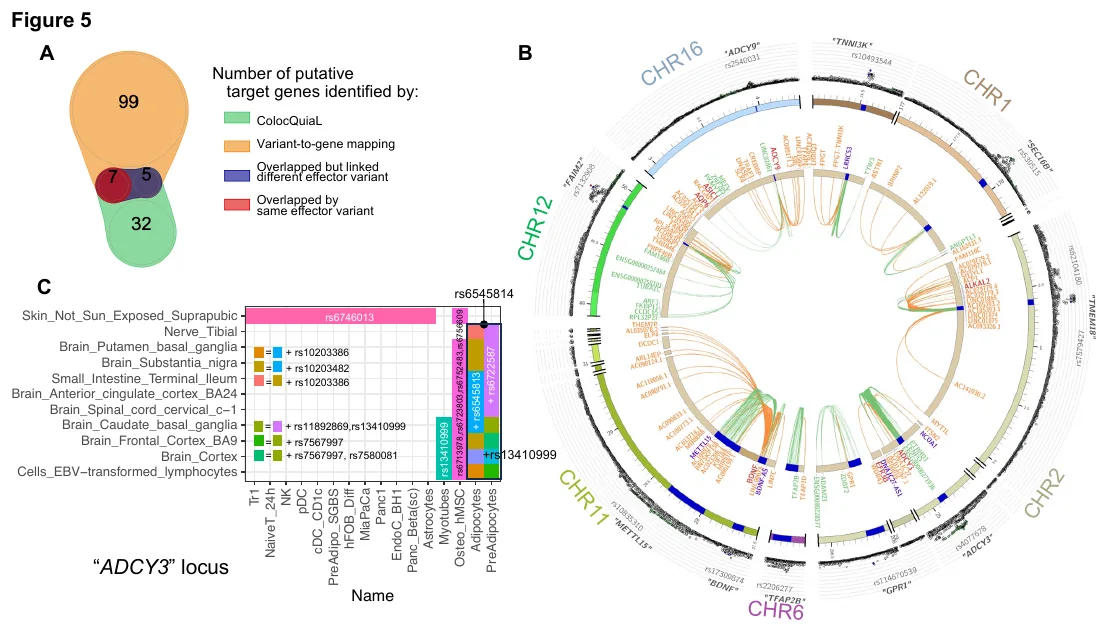
57 cell types × 16 autoimmune diseases → FDFT1, and an existing inhibitor that shifted T-cell cytokines. Genome Biology 2025 →
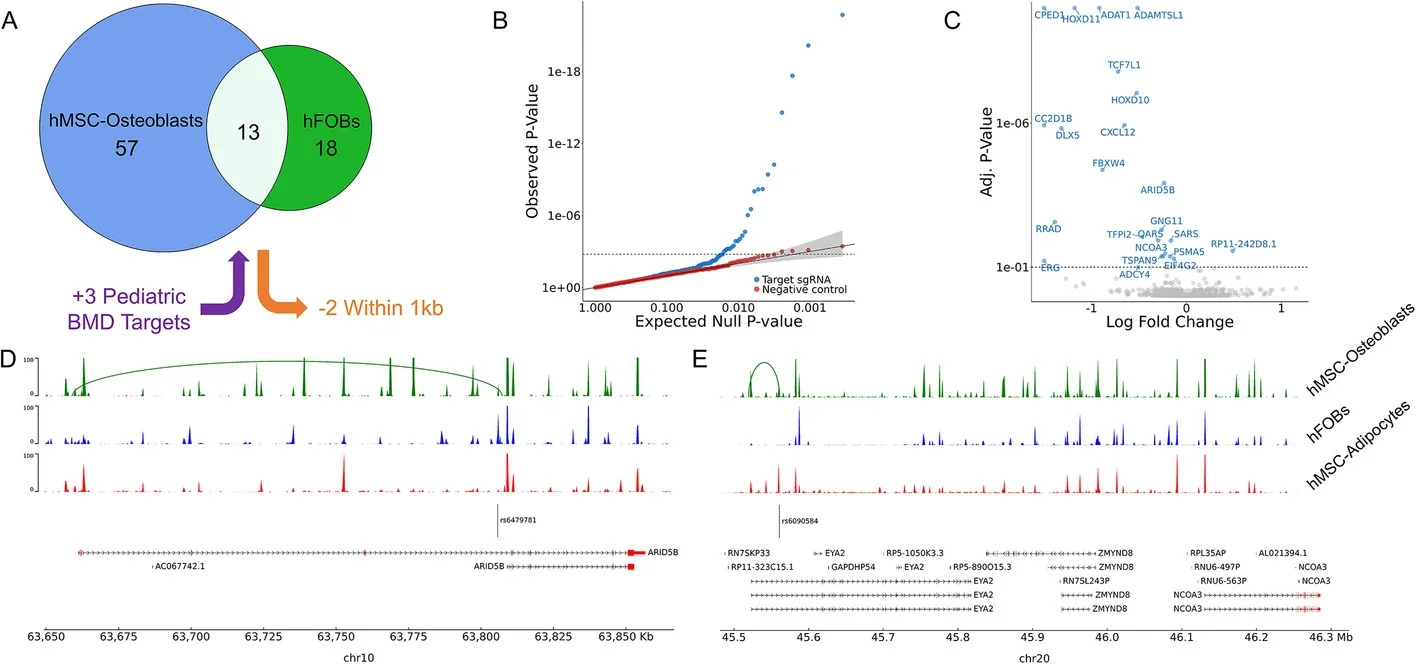
89 GWAS-prioritised elements targeted by CRISPRi: 23 genes responded, chromatin loops alone had predicted 8, and 4 held up across three follow-up assays. Genome Biology 2025 →
Genome-wide studies find thousands of risk variants. But association alone does not tell you the mechanism.
Behind every GWAS signal is a person with a genetic predisposition, and disease can arise in one organ or in several.
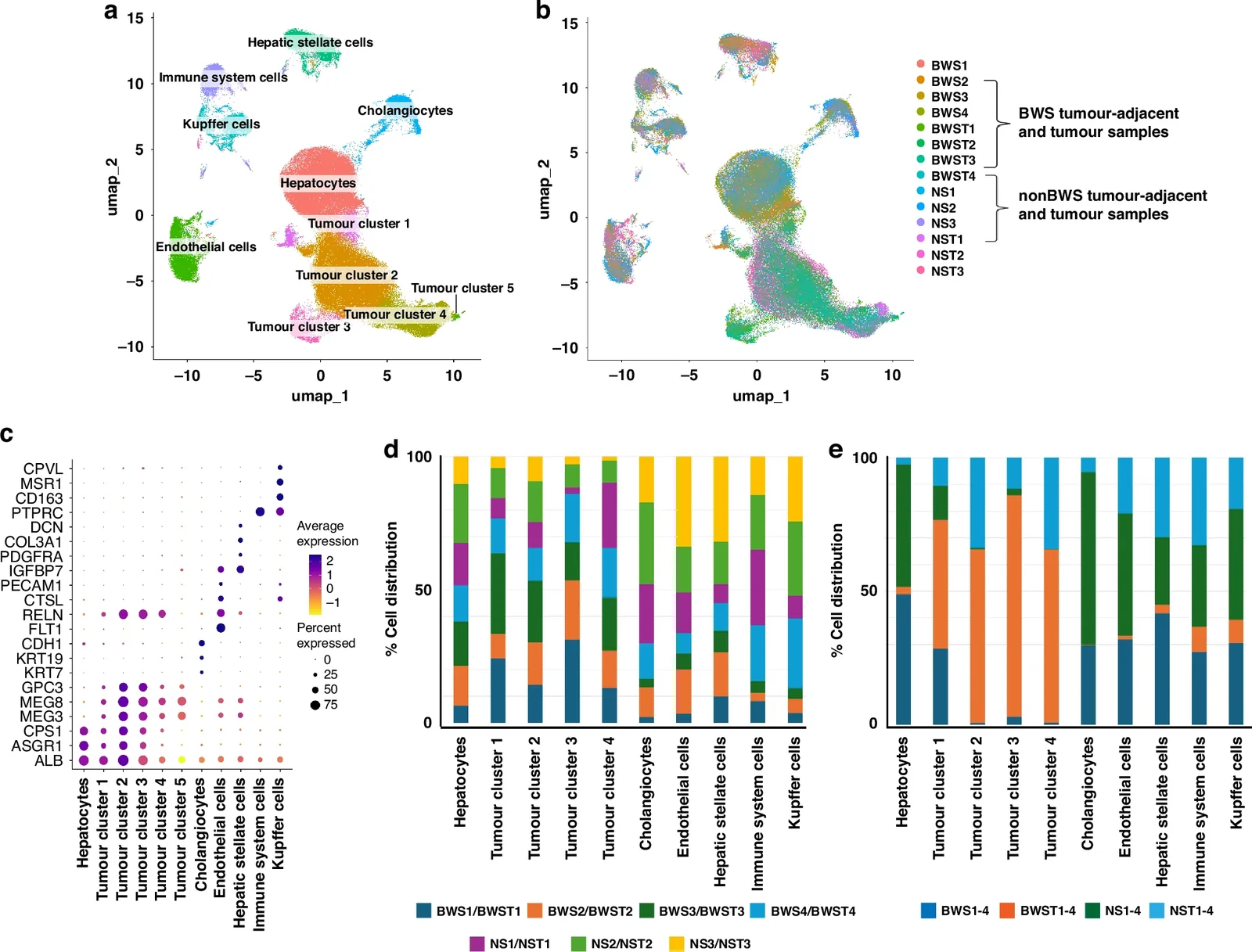
Disease happens in tissue, and cells don't act alone. Spatial omics maps each organ's cells within their microenvironment, or niche, from the layers of the brain to the follicles of a lymph node.
Grouped by gene expression, cells form types that behave differently across disease states and stages. Among fifty-seven cell types, regulatory T cells showed the strongest enrichment of type 1 diabetes genetic risk.
Placed back in each tissue, cell types show which neighbourhoods they share.
Folded chromatin brings regulatory elements into contact with genes, nominating candidates, including distant ones.
Most risk variants sit in cis-regulatory elements, such as enhancers, that loop across the chromatin to reach the genes they control.
CRISPR screens then test which predicted links actually change a gene. In one screen, chromatin loops had predicted only eight of the twenty-three genes that responded.
Linked genes then meet existing drugs. For example, an inhibitor of FDFT1 shifted T-cell cytokines: a pharmacological hypothesis worth testing further.
From a patient's concern to a hypothesis worth testing. This is the work of Khanh B. Trang.
Narration uses a synthetic voice generated for this site.